Ask anyone who stands eight hours a day and they will tell you: the floor is the enemy. Anti-fatigue mats are the standard countermeasure — recommended by ergonomists, required by safety programs, and (fair question) sometimes oversold by suppliers. Here is what the evidence actually supports, and how to buy the version that works.
What the Research Says
The mechanism is not magic — it is physics applied to legs. A compliant surface forces continuous micro-adjustments in calf, thigh, and back muscles as the body subtly rebalances. That movement pumps blood through the lower legs, which is what standing still on concrete prevents. Studies in industrial and kitchen settings consistently report reduced reported discomfort in the lower back and legs, improved circulation markers, and — the number operations managers care about — better sustained focus late in shifts. The honest caveat: mats reduce discomfort; they do not eliminate it. They are one leg of the stool alongside footwear, flooring, and rotation.
Where They Help Most
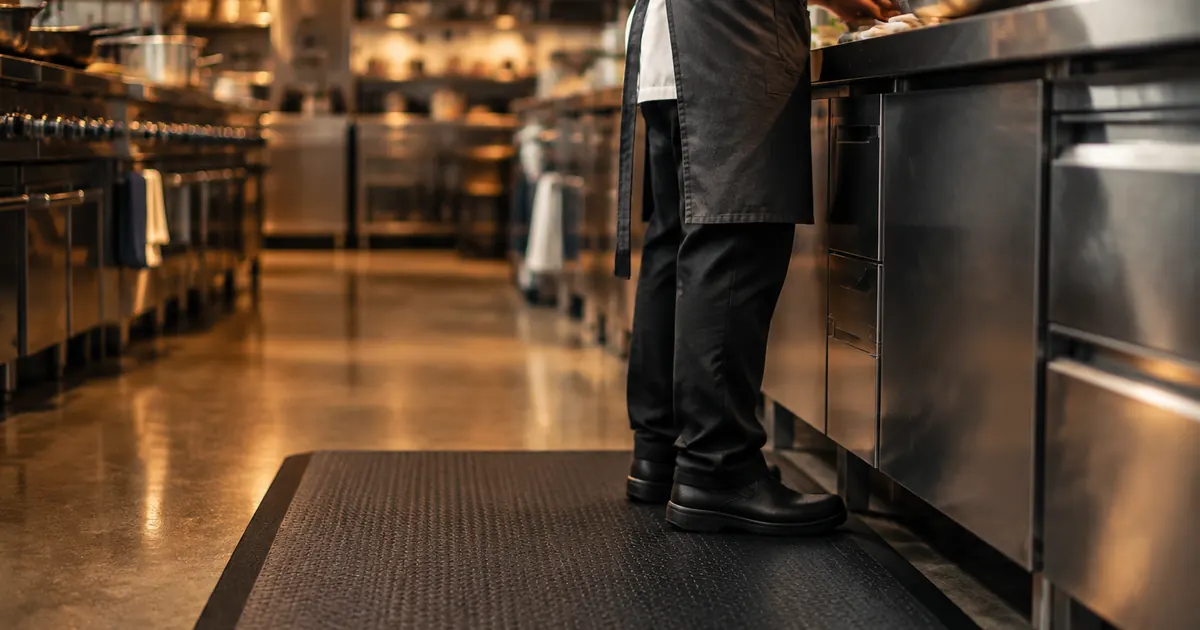
- Commercial kitchens: The classic application. A professional-grade mat at the prep line turns the hardest floor in the building into a workable one.
- Bars and service wells: Bartenders stand in one spot for hours; the rail mat doubles as spill control, catching drips while it cushions.
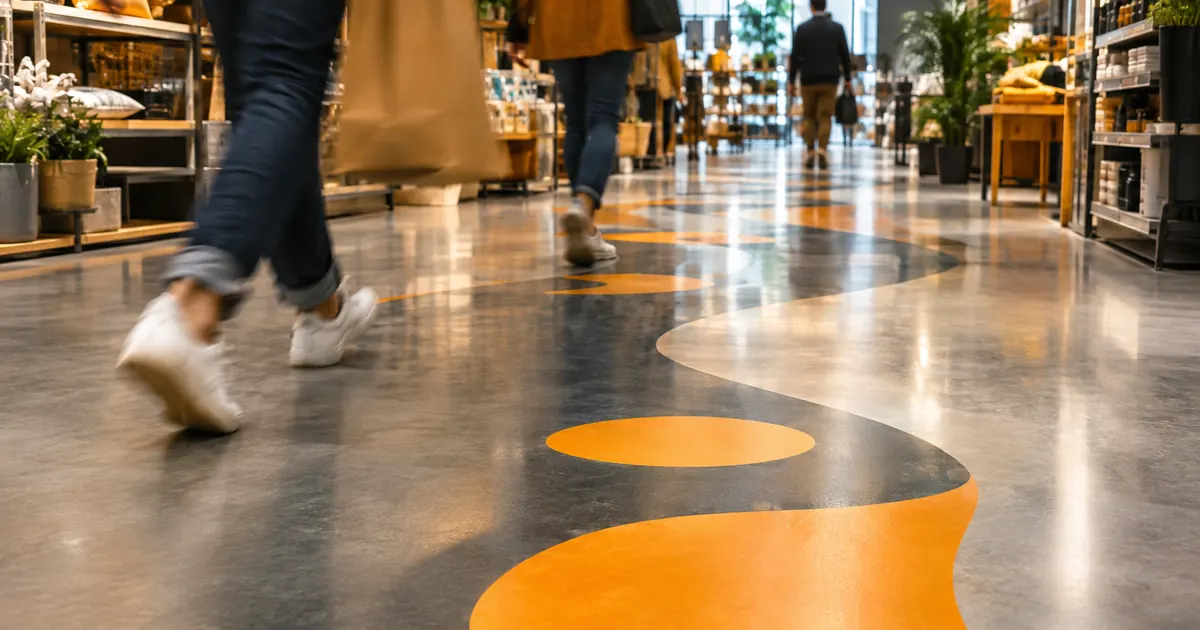
- Counters and registers: Retail and cafe staff behind the service counter mat — the highest-dwell standing position in the building.
- Standing desks: Office workers alternating sit/stand benefit from the same micro-movement effect; a desk mat underfoot completes the setup.
The Specs That Actually Matter
Thickness: 3/8 inch to 3/4 inch is the working range. Under 3/8 inch, the compression effect is too subtle; over an inch, the surface becomes unstable — a different problem entirely. Material: Nitrile rubber for kitchens and bars (oil and grease resistant, hose-cleanable); vinyl for dry retail. Edges: Beveled ramps on all sides — OSHA's general duty clause cares about trip hazards, and so should you. Surface: Textured where spills happen; smooth where you wipe constantly.
The Mistakes That Waste the Money
- Too thin. A quarter-inch "comfort mat" is a marketing term, not an ergonomic tool. If your thumb barely dents it, neither will a shift.
- Too small. The mat must cover the worker's full range of motion — every position their feet take during the task. A mat that ends mid-step gets stepped off of, then pushed aside.
- Wrong material for the spills. A fabric-top mat in a kitchen holds grease; a rubber kitchen mat in a front-of-house reads industrial. Match the surface to the room.
- No rotation or cleaning. Mats load up with debris and compress permanently. Weekly cleaning and seasonal rotation double their service life.
Placement Details That Make or Break the Benefit
Two placement rules separate mats that help from mats that migrate. First, position: the mat must cover the worker's full standing arc — every foot position the task requires — because a mat that ends mid-reach gets stepped off and pushed aside within a week. Second, anchoring: on smooth floors, the mat's rubber backing does the gripping, but the floor beneath must be clean; grit under a mat turns it into a sliding platform. Sweep before you place, check level after the first shift, and the mat stays where you put it for years.
Pairing Mats With the Rest of the Ergonomics Program
Mats work best as part of a system, and the system is simple. Footwear first: the mat and a supportive shoe share the load, and neither compensates for the other's absence. Movement second: mats enable micro-movement, but a scheduled shift in position — even thirty seconds at the counter's edge — resets the circulation cycle the mat sustains. And flooring third: the mat only helps if it lies flat and stays put, which is why the rubber-backed versions matter on hard floors where light mats migrate. Workplaces that pair quality matting with these habits report the strongest results; the mat alone is the floor's half of the bargain.
The ROI Conversation (For the Budget Meeting)
Frame it the way safety managers do: the mat is a one-time $45–135 purchase against the ongoing costs of standing-workplace complaints — discomfort-related absences, turnover in back-of-house roles, and the general productivity fade of a workforce that hurts by 2pm. Facilities that add anti-fatigue matting at counters and lines rarely remove it; the complaints it generates are zero. Start with the counter and service positions where staff stand longest, then extend to the bar wells — every order ships free, tax free, with 30-day returns if the crew disagrees.