Mats fail in one of two ways: they wear out, or they fill up. The second happens first, and it is reversible — a mat that has stopped absorbing is not broken, it is full. The entire discipline of mat care is keeping capacity ahead of traffic. Here is the schedule by material.
Rubber Mats: The Indestructibles
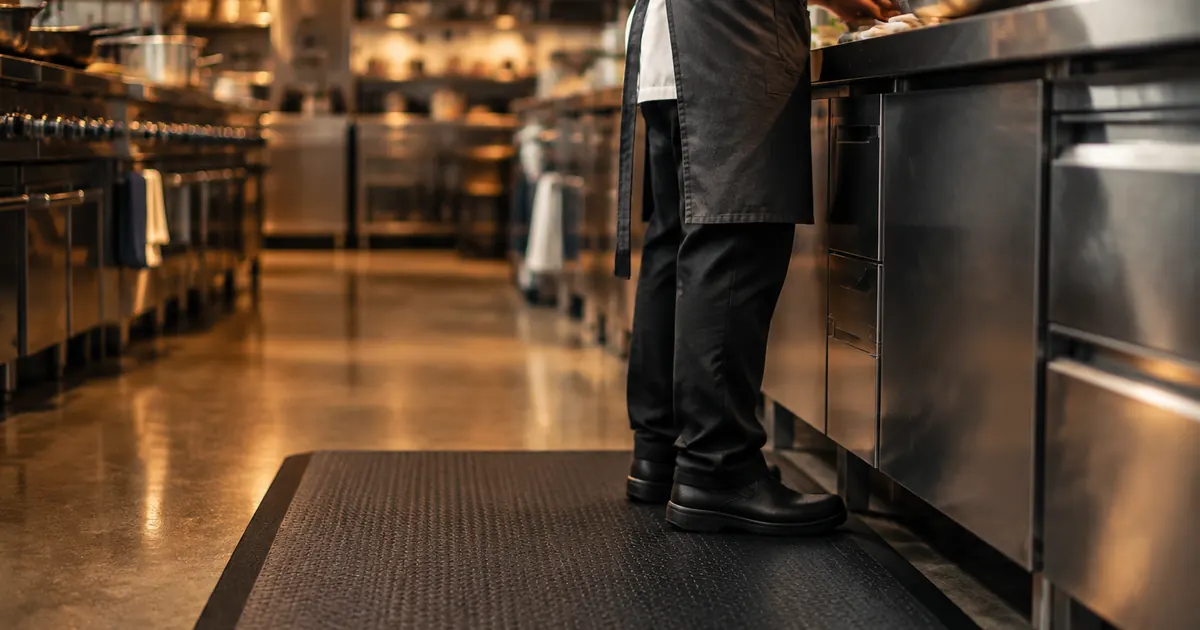
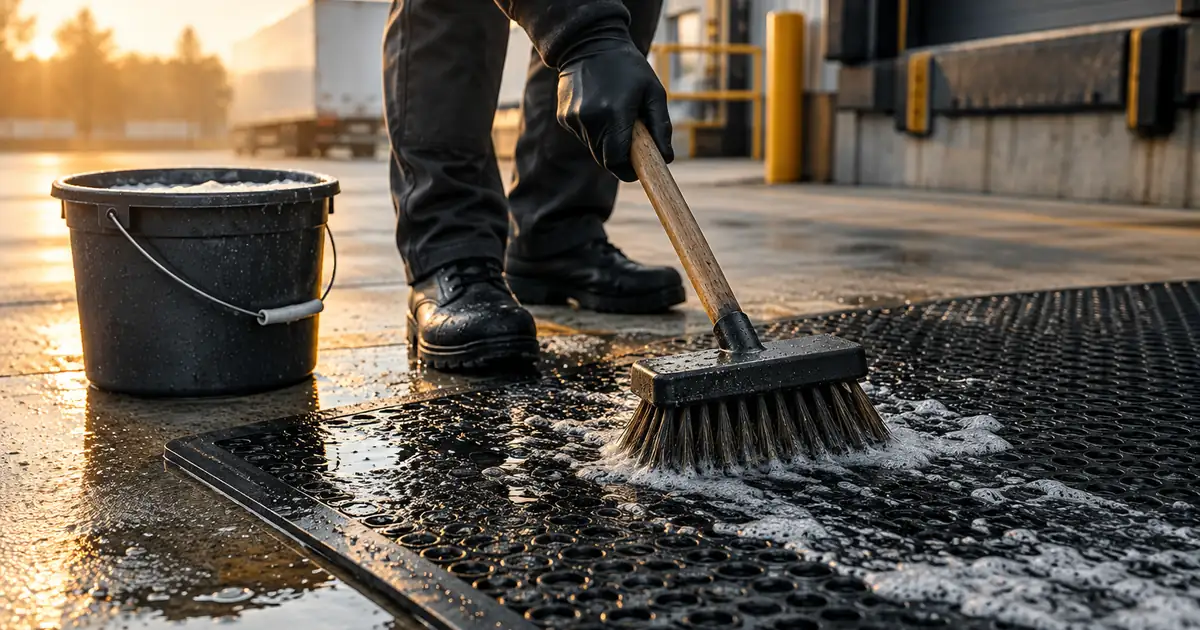
Solid and recycled rubber — entrance mats, bar mats, counter mats — are the easiest equipment in the building to maintain. Daily: shake, sweep, or vacuum loose debris. Weekly: hose down or scrub with mild detergent and rinse; a stiff brush works the texture clean. For kitchen and bar mats, commercial dishwasher cycles are fine if the mat is rated for heat. Never use solvent-based cleaners on rubber — they dry it and speed cracking. A maintained rubber mat's honest lifespan is 5–10 years; the failure mode is usually UV and ozone at the edges, not the surface you walk on.
Coir Mats: The Scrapers
Coir (coconut fiber) cleans by scraping, which means it holds what it scrapes. Weekly: shake outdoors or beat with a broom handle — seriously, the old way is the right way. Monthly: hose down and dry completely in sun before returning to service; coir that stays damp can stain the floor beneath it. Do not vacuum coir aggressively — the fiber sheds naturally, and vacuum beater bars accelerate it. Expect 2–3 years of outdoor service; the fiber grays with UV, which is cosmetic, not structural.
Berber and Carpet Mats: The Wickers
Carpet-top mats clean differently because their job is different — they wick moisture and hold fine dust. Daily: vacuum (this is the whole maintenance program; pile capacity is the mat's working capacity). Weekly: vacuum both sides, since grit migrates to the backing. Monthly: spot-clean with carpet detergent; never saturate — a soaked carpet mat becomes a mildew farm on a rubber backing. Professional extraction cleaning once or twice a year resets the pile completely. The Berber entrance mat rewards this routine with 3–5 years of service in commercial traffic.
Vinyl Mats, Placemats, and Graphics
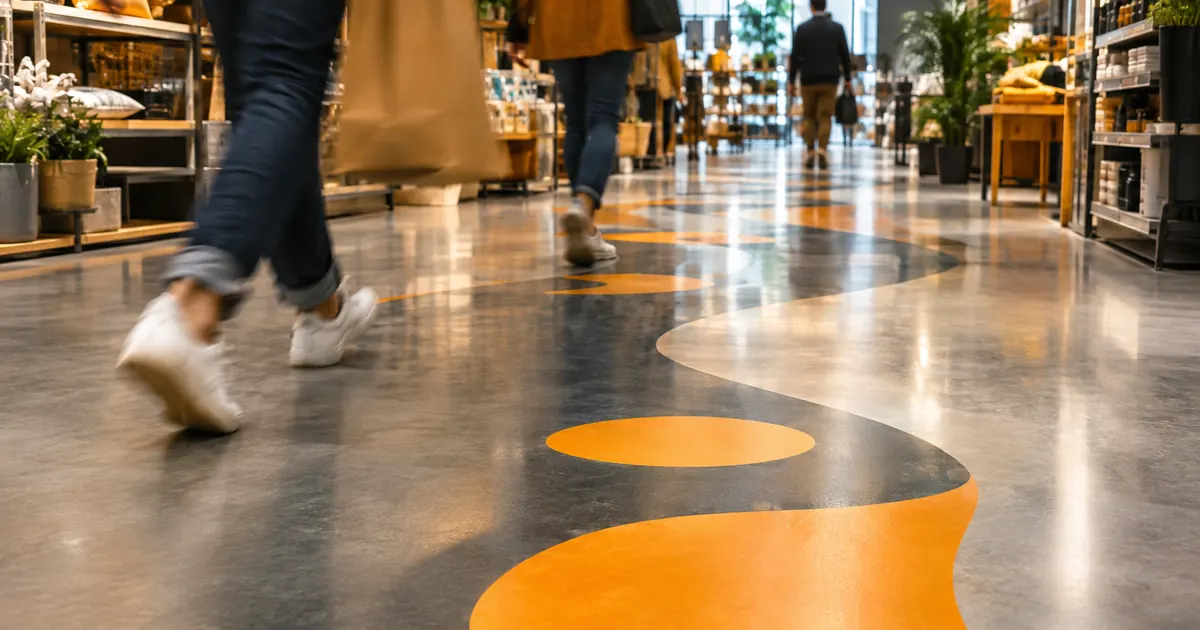
Vinyl surfaces — placemats, counter mats, desk mats — wipe clean in seconds, which is why restaurants run them. Daily: damp cloth with mild detergent. Weekly: both sides, checking edges where grime collects. The only real enemy is heat: hot pans warp vinyl placemats and curl graphics edges, so keep direct heat off the surface. Floor graphics need the gentlest touch — pH-neutral cleaner, soft brush, no solvents on the printed face.
The Mistake That Costs the Most: Skipping the Underneath
The surface gets cleaned; the floor beneath rarely does — and that is where the expensive problems live. Grit migrates through carpet mats and grinds against polished floors with every footstep, which is how a "protective" mat scratches the finish it was guarding. Rubber mats trap moisture against wood and sealed concrete when never lifted, and the result is discoloration that outlives the mat. The fix is built into the schedule: whenever you deep clean a mat, clean the floor beneath it and let both dry fully before the mat returns. In wet climates, a mat that never gets lifted is the single most common cause of floor damage in an otherwise careful facility.
The Rotation Habit That Doubles Lifespan
Wear concentrates where feet concentrate — the center of every mat wears first. Rotating each mat 180° every season distributes that wear and is the difference between a mat that thins in the middle and one that retires evenly after years. Pair rotation with the seasonal deep clean and you have the entire program: daily vacuum or shake, weekly wash, monthly deep clean, seasonal rotate.
Storage Between Seasons (Event and Seasonal Mats)
Seasonal mats — event decals, holiday logo mats, the patio set that comes in each winter — need storage as thoughtful as their cleaning. Clean and dry everything first; a mat stored damp grows mildew that outlives the season. Roll rubber and carpet mats with the pile facing out rather than folding (folds crease permanently); store vinyl flat or loosely rolled away from heat, which warps it. Label the storage tube with the size and location, and next season's setup takes minutes instead of an archaeology session. Mats stored well come back looking like the day they arrived.
When to Replace (and What That Looks Like)
- Rubber: Cracks across the surface, edges curling, backing smooth enough to slide.
- Coir: Fiber worn flat and patchy — it has stopped scraping.
- Carpet/Berber: Pile crushed permanently, mat saturates instantly, odor survives cleaning.
- Vinyl: Warping, cracking, or printed graphics worn illegible.
When replacement day comes, the entrance collection and every other category ship free and tax free — and a mat on the rotation schedule from day one typically outlasts two neglected ones, which is the actual math that makes maintenance worth the thirty seconds a day.