Retail fights for eye-level attention with a hundred other signals. Floor graphics opt out of that fight entirely: they occupy the one surface every visitor crosses and nobody else's ad can reach. The medium is proven — wayfinding studies show floor decals outperform wall signage for directing movement — and the barrier to entry is a roll of vinyl. Here is how to use it well.
What Floor Graphics Actually Are
Printed vinyl with two defining features: a non-slip over-laminate (rated for foot traffic — this is not optional, it is the product) and a removable adhesive engineered to release cleanly. The 4x6 durable vinyl floor graphic is the workhorse format for retail floors; round 12-inch decals suit spot messaging; and removable 12x12 stickers cover the high-turnover use cases at under $2 a unit.
The Use Cases That Earn Their Floor Space
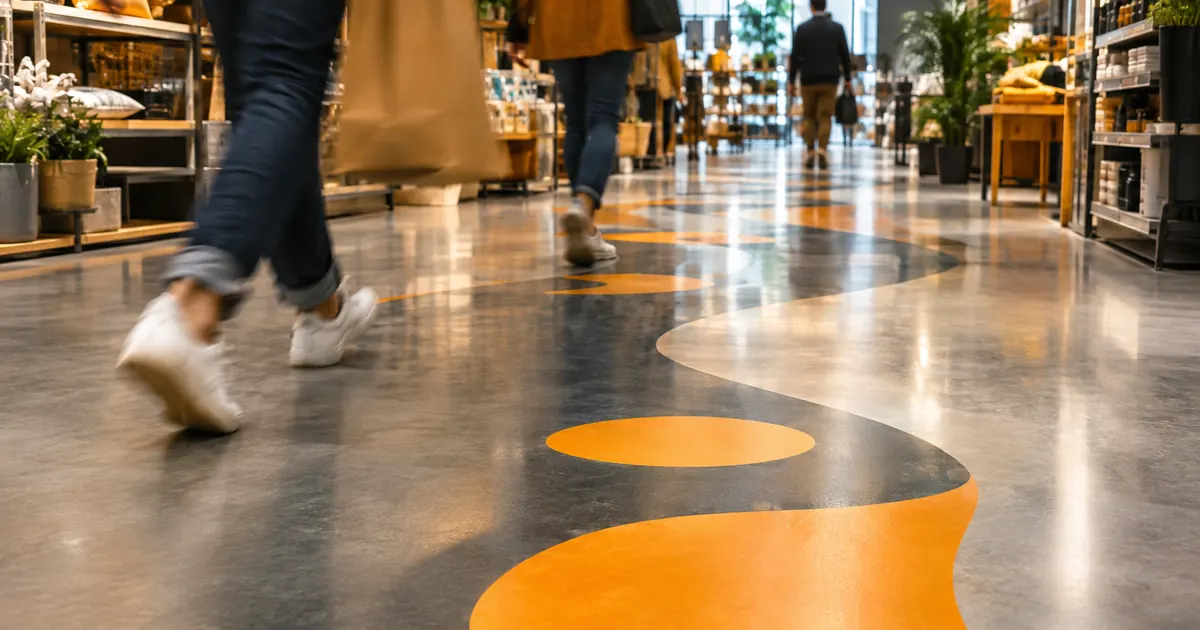
- Wayfinding: Arrows and path graphics that move people from entrance to destination — the highest-measured impact in the medium. Aisles, departments, checkout queues.
- Promotion at point of decision: The message that lands three steps from the shelf outperforms the same message across the store. "The sale is here" beats "the sale exists."
- Queue management: Decals that make the checkout line feel designed instead of accidental.
- Events and expos: The 24x24 event decal brands a booth floor in minutes and peels clean at teardown — no residue disputes with the venue.
- Safety and distance marking: Floor markings that keep clear zones clear, in a format that survives cart traffic.
Placement: The Traffic-Line Rule
Floor graphics get seen where walkers slow or converge: entrances, aisle ends, intersections, and queue lines. The natural sightline is 6–10 feet ahead of a walker's feet — so a graphic reads best when it is big enough to parse from that distance and positioned where the eye drops naturally. One large graphic at the decision point outperforms a scatter of small ones; visual clutter reads as background noise by the second visit.
Budgeting the Program
Floor graphics are priced like print, not like signage — which is what makes the medium accessible. Spot decals run from under $2 (the 12x12 removable stickers) to $35 for round branded decals; a full 4x6 traffic-lane graphic runs $175; event decals land in between. Against a print run of flyers that get glanced at once, a floor graphic works every day of its 6–12 month life for a one-time cost. Start with one wayfinding path and one promotion-at-the-shelf test, measure the movement, then scale the program with the formats that earned their floor.
Specs to Check Before Ordering
- Slip rating: The laminate should carry an R-rating or ASTM traction certification for the environment — wet-rated for entries, standard for interior.
- Traffic class: Match the vinyl to foot traffic level; event-grade vinyl is not cart-traffic vinyl.
- Adhesive: Removable for temporary campaigns, permanent for wayfinding you want to last years.
- Floor compatibility: Sealed concrete and tile are ideal; waxed floors need the wax stripped first or the adhesive fights the finish.
Outdoor and Pavement: The Heavy-Duty Tier
Sidewalks and parking lots are the same medium with a harder life. Thermoplastic pavement graphics are a different technology — fused to the surface rather than glued — and they survive plows, salt, and seasons that would destroy vinyl. They are the pick for entrance approaches, drive-thru paths, and any message that needs to outlive the weather.
Design Notes From Stores That Do This Well
The graphics that work share three traits. High contrast: a dark graphic on light flooring (or the reverse) reads from 10 feet; low-contrast designs read from 3, which is too late. One message per graphic: an arrow plus a word beats an arrow plus a paragraph — nobody stops mid-aisle to read the floor. Directional bias: arrows and paths work with the store's natural flow, not against it; a graphic that asks shoppers to turn against their drift gets walked past on principle. And measure twice before printing: a graphic sized to the aisle's actual width (not the floor plan's) fits the space the way signage fits a wall — intentional, not applied.
Measurement, Installation, and the Honest Numbers
Installation is a two-person, one-evening job for most stores: clean the floor (isopropyl, no residue), position with tape hinges, peel, squeegee from center out. A 4x6 graphic goes down in twenty minutes. Lifespan in real retail conditions: 6–12 months for standard vinyl in traffic lanes, years off-lane; thermoplastic measures its life in years. Against that: the medium's view rate is effectively 100% of visitors, production costs are a rounding error in most marketing budgets, and the full floor graphics collection ships free and tax free — the cheapest untested channel your floor has been sitting on.